


Kids Dental Sealants Explained for Parents
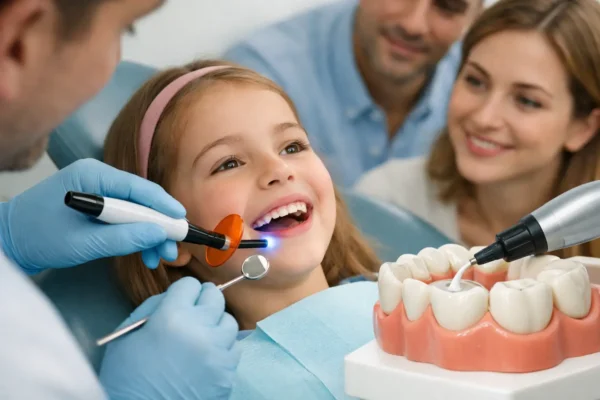
A newly erupted permanent molar can look perfectly healthy and still be hard for a child to clean. Those back teeth have tiny grooves that can hold food and bacteria long after brushing is finished. Kids dental sealants explained simply: they are a preventive coating that helps protect these cavity-prone chewing surfaces while your child is still learning strong daily brushing habits.
For many families, sealants are one of the easiest ways to give permanent molars a great start. They are quick to place, do not require needles or drilling on a healthy tooth, and can provide meaningful protection during the years when cavities are especially common.
What Are Dental Sealants?
A dental sealant is a thin, protective resin coating placed on the chewing surface of a back tooth. It flows into the natural pits and grooves of the tooth, then is hardened with a special curing light. Once in place, the sealant creates a smoother surface that is easier to keep clean.
Sealants do not cover the entire tooth. They are usually applied to molars and premolars, where deep grooves can make even careful brushing less effective. Front teeth generally do not need sealants because their smoother surfaces are easier to brush and less likely to trap food.
Think of a sealant as a raincoat for the top of a back tooth. It does not replace brushing, flossing, fluoride, or regular dental visits. It adds another layer of protection in a spot where children often need it most.
Why Back Teeth Need Extra Protection
The first permanent molars often arrive around age 6, followed by additional permanent molars around age 12. These teeth are important for chewing and for guiding the bite as a child grows. They also sit far back in the mouth, where a child may have trouble reaching well with a toothbrush.
Even when a child brushes twice a day, the bristles may not reach to the bottom of a narrow groove. Bacteria can use the trapped food particles to make acids that weaken enamel and begin a cavity. A sealant blocks that hiding place before decay gets the opportunity to start.
This is especially helpful for children who have already had cavities, have deep grooves in their molars, are still improving their brushing skills, or tend to snack frequently. However, a child does not need a history of cavities to benefit. Prevention is often most effective before a problem appears.
Sealants and fluoride work differently
Fluoride strengthens tooth enamel and helps teeth resist acid attacks. Sealants physically cover vulnerable grooves. Both are valuable preventive tools, but they do different jobs. Your child’s pediatric dentist may recommend one or both based on cavity risk, tooth development, diet, home care, and what they see during the exam.
What Happens During a Sealant Appointment?
Parents are often relieved to learn that placing a sealant is simple and comfortable. The tooth is cleaned and dried first. The dental team applies a gentle conditioning solution so the sealant can bond securely, rinses and dries the tooth again, then paints on the liquid sealant.
A blue curing light hardens the material in seconds. The dentist checks the bite and makes sure the sealant feels smooth and natural. The entire process usually takes only a few minutes per tooth.
Because sealants are placed on healthy tooth surfaces, no drilling is usually needed. A child may notice the dental team working in the back of the mouth and the bright curing light, but the treatment should not hurt. For children who feel unsure, calm explanations and encouragement can make a big difference. At Little Town Smiles, the goal is to build a trusting relationship so children understand that preventive visits can be easy and positive.
When Should Children Get Sealants?
Timing matters. Sealants are most helpful when they are placed soon after permanent molars come in, before the grooves have had years of exposure to cavity-causing bacteria. That often means checking the first permanent molars around ages 6 to 7 and the second permanent molars around ages 11 to 13.
Every child develops on a different schedule, so age alone does not determine the right time. A pediatric dentist will look at whether the tooth has erupted enough to stay dry during treatment and whether its chewing surface has deep grooves. If a tooth has a very shallow, easy-to-clean surface and a child has a low cavity risk, a sealant may not be necessary. Recommendations should be personal, not automatic.
Baby teeth can occasionally receive sealants, too. This may be considered when a baby molar has deep grooves and is likely to remain in place for several more years. Protecting baby teeth matters because they help children chew comfortably, speak clearly, and hold space for permanent teeth.
How Long Do Sealants Last?
Dental sealants can last for several years, and many remain effective well into adolescence. They are durable, but they are not permanent. Normal chewing, sticky foods, teeth grinding, and changes in the bite can wear down or chip the coating over time.
That is why regular checkups remain essential. At each visit, the dentist can inspect the sealants and repair or replace them if needed. A sealant that is partially worn does not mean it failed. It simply means the tooth may need a touch-up to stay protected.
Children can eat and drink normally after a sealant appointment. Good home care still matters: brush twice daily with fluoride toothpaste, floss where teeth touch, and keep sugary snacks and drinks as occasional treats rather than all-day habits. A sealant protects the chewing surface, but cavities can still form between teeth or near the gumline.
Are Dental Sealants Safe?
Sealants have been used in pediatric dentistry for decades and are widely recognized as a safe preventive option. The amount of resin material used is very small, and it is bonded to the tooth surface. Parents who have questions about materials, allergies, or their child’s health history should feel comfortable discussing them with their pediatric dentist before treatment.
The larger safety consideration is the benefit of preventing decay. Untreated cavities can lead to discomfort, infection, missed school, difficulty eating, and more involved dental care. While no treatment can guarantee a child will never get a cavity, sealants can lower risk in one of the most vulnerable areas of the mouth.
Questions Parents Often Ask About Kids Dental Sealants
Can sealants be placed over a small cavity?
Sometimes a dentist may seal a very early area of enamel change, but this depends on the tooth and whether decay has progressed. A sealant is not a substitute for treating a cavity that needs restoration. The dentist will use the exam and, when appropriate, X-rays to determine the healthiest option.
Will my child feel the sealant while eating?
Most children adjust immediately. The coating is very thin, and the dentist checks the bite before the appointment ends. If a tooth feels unusually high or uncomfortable after the visit, call the dental office so it can be checked.
Does insurance cover sealants?
Many dental plans provide coverage for sealants on permanent molars for children, often within specific age limits. Coverage varies by plan, tooth, and benefit rules. Your dental office can help you understand what questions to ask your insurer before treatment.
A healthy smile is built through small, steady choices: a good brushing routine, nutritious habits, regular checkups, and preventive care at the right time. If your child has newly erupted back teeth or you are unsure whether sealants are appropriate, a pediatric dental visit can provide clear guidance and help protect the healthy teeth they are growing into.
Categories: Blog

Comments are closed.