


Silver Diamine Fluoride Versus Filling: Which?
A cavity can feel like a big surprise, especially when your child seemed perfectly comfortable at home. When a pediatric dentist discusses silver diamine fluoride versus filling, the question is not simply which treatment is easier. It is about choosing the care that protects your child’s tooth, fits their needs today, and helps them keep building confidence at the dentist.
Both options can have an important place in pediatric dental care. The best choice depends on the size and location of the cavity, whether the tooth is causing symptoms, how much healthy tooth remains, your child’s age and comfort level, and how long the tooth needs to stay in place.
What silver diamine fluoride does
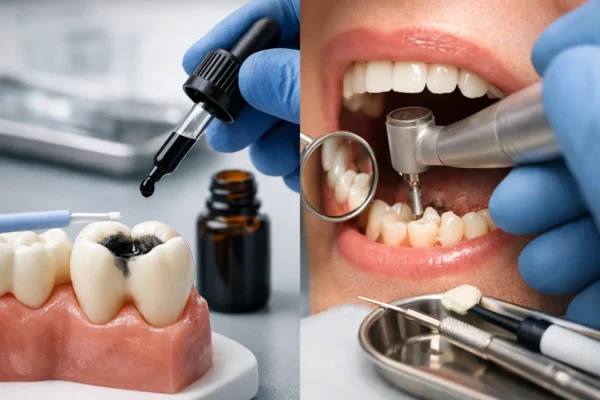
Silver diamine fluoride, often called SDF, is a liquid medication painted onto a cavity. It is used to slow or stop active tooth decay. The silver helps fight cavity-causing bacteria, while fluoride helps strengthen the tooth structure that remains.
For many children, the application is quick and gentle. The dentist dries the area, carefully places a small amount of SDF on the cavity, and allows it to absorb. There is no drilling involved, and numbing medicine is usually not needed. That can make SDF especially helpful for a very young child, a child who feels worried about dental treatment, or a child with several early cavities that need attention.
SDF is not a way to make a cavity disappear. It is a way to arrest, or stop, the decay from progressing. The tooth still needs regular follow-up visits so the dental team can confirm the cavity remains inactive and the tooth stays healthy enough to function.
The trade-off parents should know
SDF turns the decayed portion of a tooth dark brown or black. This color change is expected and is often a sign that the treatment has worked on the cavity. Healthy tooth enamel does not turn black.
The staining may be less concerning on a back tooth, especially when preserving the tooth without drilling is the immediate priority. On a front tooth, though, appearance can be a bigger part of the family’s decision. Your pediatric dentist can explain where staining is likely to show and whether another option may better meet your child’s needs.
What a filling does
A filling restores a tooth after the dentist removes decayed material and prepares the area. The filling material replaces the lost tooth structure, helping the child chew comfortably and protecting the tooth from collecting food and bacteria in the damaged area.
Unlike SDF, a filling can rebuild a tooth that has a hole, a weak edge, or damage that may worsen under chewing pressure. Fillings are often recommended when decay is larger, when the tooth needs structural support, or when the cavity is in a place where food easily gets trapped.
Placing a filling usually requires your child to stay still for longer than an SDF application. Depending on the treatment, the dentist may recommend local anesthetic to keep the area comfortable. For some children, this is very manageable with calm coaching, breaks, and a caring team. For others, particularly toddlers or children with extensive treatment needs, timing and behavior guidance deserve thoughtful discussion.
A filling is also not a lifetime shield against future cavities. The tooth still needs brushing with fluoride toothpaste, healthy eating habits, regular checkups, and support from parents as children learn to care for their smiles independently.
Silver diamine fluoride versus filling: how dentists decide
A pediatric dentist looks beyond the X-ray or the visible spot on the tooth. Children are growing quickly, and baby teeth have an important job: they help with chewing, speech, comfort, and holding space for permanent teeth. Preserving them whenever possible matters.
A small or moderate cavity that is not painful may be a good candidate for SDF, particularly if the priority is to stop decay quickly and avoid a more involved visit. SDF can also be a useful first step when a child needs time to become more comfortable in the dental chair. A future filling or crown may still be needed if the tooth loses structure or the cavity becomes active again.
A filling may be the better recommendation when a cavity is deep, food traps in it regularly, the tooth is breaking down, or the area needs to handle strong chewing forces. If decay is close to the nerve, a filling alone may not be enough. The dentist will explain whether additional treatment is needed to protect the tooth or address infection.
Pain, swelling, a gum bump, fever, or trouble sleeping because of a toothache should never be treated as a wait-and-see concern. These signs call for a prompt dental evaluation. The right next step depends on the source and severity of the problem, not on choosing the least involved treatment.
When SDF can be a thoughtful choice
Parents sometimes worry that choosing SDF means they are settling for less care. In the right situation, that is not true. SDF can be an evidence-based, child-friendly treatment that stops active decay while reducing stress for a child who is not ready for a longer procedure.
It may be particularly helpful when a cavity is on a baby tooth that will naturally fall out in the nearer future, when access to a quick treatment matters, or when a child has medical, developmental, or anxiety-related needs that make traditional restorative treatment harder. It can also give families a chance to focus on daily habits that reduce the risk of new cavities.
Still, SDF requires partnership. A treated tooth needs follow-up, and parents should let the dental office know if the child develops pain, swelling, sensitivity, or changes in eating. If the cavity is no longer stable, the treatment plan may need to change.
When a filling may better protect the tooth
A filling is often the more durable choice when the tooth needs to be rebuilt. For example, if a cavity has created a substantial opening between teeth or on a chewing surface, stopping the decay may not solve the practical problem of a weakened tooth. Restoring its shape can help your child eat, clean the area, and use the tooth normally.
A filling can also be preferable when the dark color from SDF would be upsetting to a child or family, especially on a visible front tooth. Cosmetic concerns are valid, but they should be considered alongside the health and stability of the tooth.
Every child’s readiness matters, too. A positive filling visit can build trust when the care is planned at the right pace. Pediatric dental specialists use age-appropriate language and supportive techniques to help children understand what is happening without making the experience feel frightening.
Questions worth asking at the appointment
A clear conversation can make treatment decisions feel much less overwhelming. Ask whether the cavity is active, how much tooth structure remains, whether your child is likely to feel discomfort, and what may happen if treatment is delayed. It is also reasonable to ask if SDF is intended as a long-term solution or a bridge to future restorative care.
You can ask about the appearance of the treated tooth, what your child will experience during a filling, and how the office will support their comfort. Your dentist should welcome these questions and explain the recommendation in plain language.
At Little Town Smiles, families are partners in care. A recommendation should reflect both clinical needs and the child sitting in the chair – their health, development, comfort, and ability to have a positive dental experience.
Helping your child feel ready
Avoid describing dental treatment as a punishment or using words that may create worry, such as “shot,” “drill,” or “hurt.” A simple message works best: the dentist is going to count teeth, check the sugar bugs, and help the tooth get strong. Let the dental team introduce treatment words in a child-friendly way.
Before the visit, keep routines steady, offer a light meal if instructed, and bring a favorite comfort item for younger children. Afterward, praise your child for being brave in a specific way, whether they opened wide, listened carefully, or sat with a parent nearby. Small successes are how a trusting relationship with dental care grows.
The goal is not to rush every cavity into the same treatment. It is to give your child the care that makes sense for their tooth and their stage of life, while helping them leave the office feeling capable of coming back again.
Categories: Blog

Comments are closed.