


How to Brush Toddler Teeth Without a Daily Battle
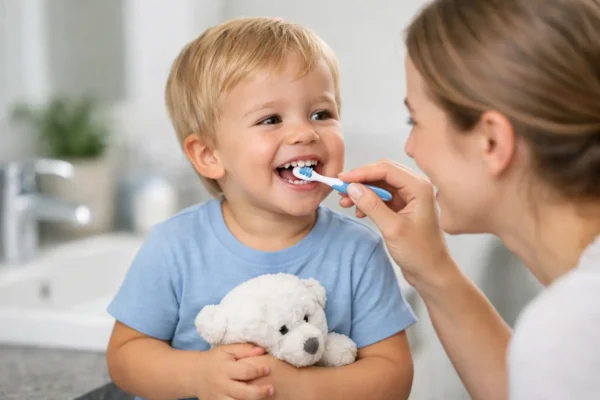
A toddler who clamps their mouth shut, wiggles away, or insists on brushing independently is not giving you a parenting report card. They are being a toddler. Learning how to brush toddler teeth is less about finding a perfect technique and more about combining a consistent routine with enough parent help to remove plaque from small, hard-to-reach teeth.
The goal is simple: clean teeth twice a day, make brushing feel safe and ordinary, and gradually invite your child into the process. A few minutes of patient practice now can help protect their smile and build confidence in daily care for years to come.
How to Brush Toddler Teeth Step by Step
Choose a small, soft-bristled toothbrush with a handle your child can hold comfortably. Use fluoride toothpaste, because fluoride helps strengthen enamel and lowers the risk of cavities. For children younger than 3, use a smear about the size of a grain of rice. Once your child turns 3, use a pea-sized amount.
Have your toddler sit on your lap, stand between your knees, or lean back against you on the floor or bed. The best position is the one that lets you see their teeth clearly while helping them feel secure. Many parents find that brushing in front of a mirror works well, especially when toddlers want to watch and copy what is happening.
Angle the bristles gently toward the gumline and use small circles on the outside, inside, and chewing surfaces of every tooth. Do not forget the back molars, where food and plaque often linger. Brush for about two minutes, twice each day: once after breakfast and once before bed.
At bedtime, brushing should happen after the final snack, milk, or other drink besides water. Teeth are most vulnerable when sugar remains in the mouth overnight and saliva flow naturally slows down.
Your toddler can hold a toothbrush and practice, but an adult should do the thorough brushing. Most young children do not have the hand control to clean effectively on their own. A helpful approach is “you brush, then I brush.” Let your child have a turn first, then explain that it is your turn to find the teeth that need extra help.
After Brushing: Spit if They Can, but Do Not Worry
Toddlers may swallow some toothpaste. With the recommended small amount, that is generally expected. Encourage your child to spit when they are ready, but do not make it a stressful test. They do not need to rinse with water afterward, since rinsing can wash away fluoride that continues protecting the teeth.
Keep toothpaste out of reach between brushing times. A toddler who likes the flavor may try to eat it, so this small safety habit matters.
Make Brushing Part of the Day, Not a Negotiation
Toddlers respond well to routines they can predict. Try to brush at the same times, in the same place, with the same short sequence each day. A simple song, a two-minute timer, or counting each tooth can make the experience feel familiar instead of like an interruption.
Choices can also give your child a sense of control without changing the nonnegotiable part of the routine. Ask whether they want the blue toothbrush or the green one, whether they want to sit on your lap or stand on a step stool, or which song they want to hear. The choice is real, but brushing still happens.
Praise effort more than perfection. Phrases such as “You opened so wide for me” or “You helped us clean your back teeth” build cooperation without turning oral care into a performance. Avoid using a dental visit, a dentist, or tooth problems as a threat. Children deserve to see dental care as helpful, calm, and part of staying healthy.
If your toddler strongly resists, stay matter-of-fact and keep the moment brief. You may need to gently stabilize their hands or head to finish brushing safely, particularly when they have a mouthful of teeth and very little patience. That can feel uncomfortable for parents, but it is sometimes necessary to protect a child’s health. Use a calm voice, explain what you are doing, and offer comfort immediately afterward.
Common Toddler Brushing Challenges
“My child only wants to do it alone.”
Independent brushing is a wonderful skill to encourage, but it is not yet enough. Let your child start, then say, “Great job. Now it is my turn to check for sugar bugs.” A playful phrase can be useful, as long as it does not create fear. Keep your follow-up brushing gentle, thorough, and predictable.
“My toddler hates having their mouth touched.”
Start with very small wins. Practice opening wide in the mirror, count teeth without brushing, or let your child brush a favorite stuffed animal’s teeth. Then return to brushing for a little longer each day. Sensory preferences, teething, tiredness, and a recent illness can all make brushing harder, so adjust your approach while keeping the routine in place.
If your child cries every time, consider whether the brush feels too large, the toothpaste flavor is too strong, or the timing is too rushed. A different soft brush or a quieter moment can make a meaningful difference.
“My child bites the toothbrush.”
Biting is common, especially while molars are coming in. Offer a chilled teething ring before brushing if gums seem sore, then use gentle pressure and short strokes. Avoid tugging hard on the brush if your child bites down. Pause, calmly ask them to open, and continue when they are ready.
“We miss the morning brush.”
Bedtime brushing is especially valuable, but twice-daily brushing is the goal. If mornings are hectic, try moving the brush and toothpaste to a visible spot, setting a reminder, or brushing right after breakfast instead of before leaving the house. The routine does not need to look perfect to be effective. It needs to happen consistently.
Fluoride, Flossing, and Snacks: The Details That Protect Teeth
Fluoride toothpaste is recommended for toddlers in the right amount. It works best alongside regular professional care, healthy eating patterns, and water throughout the day. Frequent sipping on juice, sweet drinks, sports drinks, or flavored milk can expose teeth to sugar repeatedly, even if a child does not consume much at one time. Offer water between meals and save sweet drinks for occasional moments rather than all-day sipping.
Begin flossing when two teeth touch closely enough that a toothbrush cannot clean between them. This often happens in the toddler years, especially around the molars. A parent can use a child-friendly floss pick or regular floss, whichever makes the task easier to do gently and consistently.
Also pay attention to medications. Some children’s liquid medicines contain sugar or are taken before bed. If a medication must be given at night, ask your child’s pediatrician or dentist about the best oral-care routine afterward.
When to Ask a Pediatric Dentist for Help
Schedule a dental visit by your child’s first birthday or within six months of the first tooth coming in. Early visits give children a chance to become familiar with a dental office before there is a problem, while parents can receive personalized guidance on brushing, fluoride, feeding habits, and cavity prevention.
Call a pediatric dentist sooner if you notice white or brown spots on teeth, persistent bad breath, tooth pain, swollen gums, bleeding that does not improve with gentle brushing, a chipped tooth, or trouble eating. White spots near the gumline can be an early sign of tooth decay, and early care is often simpler and more comfortable.
At Little Town Smiles, our team helps families create realistic routines that fit a child’s age, temperament, and needs. A trusting dental relationship can turn questions about brushing into reassuring, practical next steps.
Some days, your toddler may proudly say “my turn,” and other days they may protest the entire two minutes. Keep showing up with a soft brush, a calm voice, and loving consistency. Those ordinary moments at the sink are helping care for healthy teeth that last a lifetime.
Categories: Blog

Comments are closed.