


Pulpotomy Versus Root Canal for Children
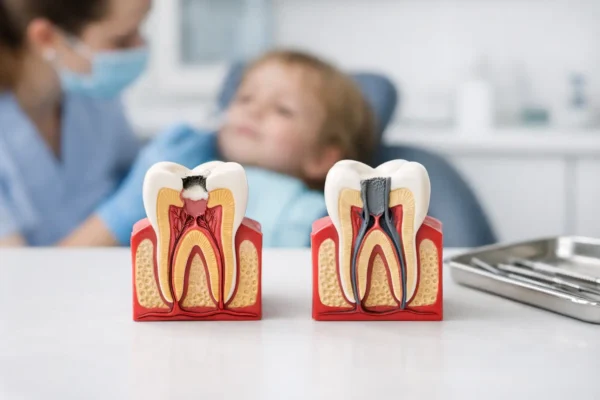
A child who wakes up with tooth pain or develops a swollen gum needs more than a quick fix. They need care that relieves discomfort, protects their smile, and helps them feel safe along the way. When parents hear terms such as pulpotomy versus root canal, it can sound frightening and complicated. In many cases, though, these treatments are thoughtful ways to save a tooth rather than remove it.
At a pediatric dental visit, the goal is always to understand what is happening inside the tooth and choose the most conservative treatment that can keep your child healthy and comfortable. The right answer depends on whether the tooth is a baby tooth or permanent tooth, how far decay or injury has reached, and the condition of the tooth’s nerve tissue.
Why the inside of a tooth matters
Every tooth has a soft center called the pulp. The pulp contains nerves, blood vessels, and connective tissue that helped the tooth develop. A deep cavity, a crack, or a dental injury can allow bacteria to reach this area. That may lead to sensitivity, lingering pain, swelling, or infection.
Baby teeth deserve careful attention even though they eventually fall out. They help children chew comfortably, speak clearly, and hold space for adult teeth that are still developing below the gums. Losing a baby tooth much too early can allow neighboring teeth to shift, which may affect the path of the permanent tooth.
When the pulp is irritated or infected, a pediatric dentist evaluates whether part of it can remain healthy or whether more complete cleaning is needed. X-rays, an exam, your child’s symptoms, and the tooth’s expected time in the mouth all help guide that decision.
Pulpotomy versus root canal: the key difference
A pulpotomy treats the portion of the pulp in the crown, or visible top part, of a tooth. A root canal treatment removes and cleans pulp tissue from the crown and roots. The treatments sound similar because both address the tooth’s pulp, but they are used for different clinical situations.
What happens during a pulpotomy?
A pulpotomy is often called a “baby root canal,” but that nickname can be misleading. It is not the same procedure. During a pulpotomy, the dentist removes the affected pulp from the top portion of the tooth while preserving healthy tissue in the roots. A medication is placed to calm and protect the remaining pulp, and the tooth is sealed.
For a back baby tooth, a crown is commonly placed after a pulpotomy. This helps protect a tooth that has lost a significant amount of structure from decay and reduces the chance that it will crack before it is ready to come out naturally. Pediatric crowns are durable, practical coverings designed to support everyday chewing.
A pulpotomy may be considered when decay has reached the pulp but the root tissue still appears healthy. It can also be appropriate after certain injuries. Your child’s dentist will look for signs that the infection has not moved into the roots or surrounding bone.
What happens during a root canal?
Root canal treatment involves removing pulp from all areas of the tooth, including the narrow root canals. The dentist cleans and disinfects those spaces, then fills and seals them to prevent bacteria from returning. The tooth is restored afterward, often with a crown when needed for strength.
For permanent teeth, root canal treatment can be an excellent way to preserve a tooth that might otherwise need to be removed. Children and teens can need root canal care after deep decay, a sports injury, or a serious fall. Saving a permanent tooth whenever possible supports long-term chewing, appearance, and bite development.
For baby teeth, the comparable treatment is often called a pulpectomy. It removes pulp from both the crown and roots using materials selected to work with the natural process of baby-tooth resorption. Parents may hear a provider use the phrase “root canal” conversationally, but asking whether the recommended procedure is a pulpotomy or pulpectomy can make the treatment plan clearer.
How a pediatric dentist chooses the right treatment
No parent should be expected to decide between treatments alone. The recommendation comes after a careful diagnosis. Sometimes a tooth that hurts needs a pulpotomy. Sometimes the pulp is too damaged for that approach, and a pulpectomy, root canal treatment, or extraction is the healthier choice.
The dentist considers how long the pain lasts, whether it occurs without eating or drinking, and whether your child has swelling, a pimple-like bump on the gums, or changes visible on an X-ray. A tooth with healthy-looking root tissue may be a good candidate for a pulpotomy. If infection has extended into the roots or surrounding bone, more extensive treatment may be needed.
Age matters, too. Preserving a back baby tooth that is expected to remain in place for several years can be especially valuable. On the other hand, if a baby tooth is very close to its normal time of shedding, another option may be more appropriate. There is no one-size-fits-all answer, which is why a specialist’s evaluation is so helpful.
Will treatment be painful for my child?
Children often arrive worried because they are already uncomfortable. Pediatric dental care focuses on changing that experience. Local anesthetic keeps the treatment area numb, and the dental team explains each step in calm, age-appropriate language. Depending on a child’s needs, the complexity of care, and their comfort level, additional comfort options may also be discussed.
After treatment, it is normal for a child’s mouth to feel numb for a short time. Mild tenderness can occur as the area settles, particularly if there was infection before treatment. Your dentist will provide specific home-care directions, including guidance about eating, brushing, and any recommended medication.
Try to use simple, reassuring words before the visit. Rather than describing a procedure in detail or promising that nothing will feel strange, let your child know the dentist will help their tooth feel better. A trusted pediatric team can take it from there.
When to call the dentist promptly
A toothache is worth a call, especially when it keeps a child from sleeping, eating, or enjoying normal activities. Contact a pediatric dentist promptly if your child has facial swelling, a swollen gum, fever along with dental pain, a loose or broken tooth after an injury, or pain that persists after a cavity has been identified.
Facial swelling, trouble swallowing, difficulty breathing, or swelling that is rapidly worsening requires urgent medical attention. Dental infections should not be watched and waited out at home. Early care is usually simpler, more comfortable, and more likely to save the tooth.
Helping protect teeth after treatment
Whether your child has a pulpotomy, pulpectomy, or root canal, daily routines still matter. Brush twice a day with fluoride toothpaste in the amount recommended for your child’s age, clean between teeth once they touch, and keep regular dental visits. Limiting frequent sugary snacks and drinks also gives treated and untreated teeth a better chance to stay healthy.
For active children, a properly fitted mouthguard is a smart layer of protection during sports. Permanent front teeth are especially vulnerable during falls and collisions, and quick dental attention after an injury can make a meaningful difference.
At Little Town Smiles, families are partners in every treatment decision. Clear explanations, gentle communication, and a plan tailored to your child’s stage of development can help turn a stressful tooth problem into a confident step toward healthy teeth that last a lifetime.
If your child is showing signs of dental pain, the kindest next step is not to guess at the treatment name. Schedule an evaluation so their smile can be assessed early, their questions can be answered, and they can get back to being a kid.
Categories: Blog

Comments are closed.