


How to Stop Teeth Grinding in Children Safely
That scratchy sound coming from your child’s room can be unsettling. Many parents first notice it after bedtime, then wonder how to stop teeth grinding before it damages their child’s smile. The reassuring news is that teeth grinding, also called bruxism, is common in children and often temporary. Still, it deserves a thoughtful conversation with your child’s pediatric dentist, especially if your child has pain, worn teeth, or disrupted sleep.
Why children grind their teeth
Children may grind or clench their teeth while asleep, and some do it during the day when they are concentrating, frustrated, or nervous. Their growing jaws and changing bite can play a role. A child who is getting new teeth, losing baby teeth, or adjusting to a changing bite may grind for a period of time.
Stress can also contribute. Even happy, well-supported children can feel pressure from a new school year, a move, busy schedules, social changes, or worries they do not yet have words to explain. Grinding is not necessarily a sign that something is seriously wrong, but it can be one way a child’s body responds to discomfort or tension.
Sleep quality matters, too. Snoring, mouth breathing, restless sleep, frequent waking, or pauses in breathing should be brought to your child’s dentist and pediatrician. These symptoms do not automatically mean grinding has a serious cause, but they may point to a sleep or airway concern that needs further evaluation.
When teeth grinding is usually harmless
Many young children grind occasionally and outgrow the habit as their teeth and jaws develop. Baby teeth are designed to serve a child through an active period of growth, so mild grinding without pain or visible damage often calls for monitoring rather than alarm.
Your child’s dentist can check for flattened biting surfaces, small chips, gum irritation, jaw tenderness, and changes in the bite during regular visits. This helps distinguish a passing habit from grinding that needs treatment. Trying to make a child stop by repeatedly calling attention to the sound can sometimes add worry, particularly at bedtime. A calm plan works better than pressure.
Signs it is time to call the dentist
Schedule a dental visit sooner rather than later if you notice any of the following:
- Your child wakes with jaw, face, ear, or headache pain.
- Teeth look chipped, unusually flat, or more sensitive to hot and cold foods.
- Grinding is loud and frequent, or it continues for several months.
- Your child avoids chewing, complains that their bite feels different, or has trouble opening their mouth comfortably.
- Snoring, gasping, mouth breathing, or very restless sleep occurs along with grinding.
Pain near the ear can be especially confusing because jaw muscles and the jaw joint are close to the ear. A pediatric dentist can look at the teeth, jaw, muscles, and bite, while your child’s pediatrician can help assess broader sleep or health concerns when needed.
Gentle ways to help stop teeth grinding at home
The goal at home is not to make bedtime feel like a dental project. It is to support a relaxed body, good sleep habits, and healthy daytime awareness.
Create a calmer wind-down routine
A predictable evening routine can lower the tension children carry into sleep. Aim for a quiet transition before bed: a bath, book, gentle music, drawing, or a few minutes of talking about the day. For some children, naming one good thing and one hard thing about the day gives worries a place to go before lights out.
Try to keep screens out of the final part of the bedtime routine when possible. Bright, stimulating content can make it harder for some children to settle. The right routine depends on your family, so keep it realistic and repeatable rather than perfect.
Notice daytime clenching without scolding
Older children and teens may clench while doing homework, playing video games, practicing sports, or concentrating. You can teach a simple reminder: lips together, teeth apart. Teeth do not need to touch when the mouth is resting.
Make this a neutral cue, not a correction. A sticky note near a study area or a quiet family phrase can help. If your child is anxious or overwhelmed, listening first may be more useful than focusing only on the clenching habit.
Choose jaw-friendly foods when soreness is present
If your child wakes with a sore jaw, offer softer foods for a day or two and avoid gum, chewy candy, ice, and other foods that make the jaw work harder. A warm washcloth held gently against the outside of the jaw may feel soothing. Ask your child’s dentist or pediatrician before giving medication for ongoing pain, particularly if you are unsure of the cause.
Keep up everyday dental care
Brushing twice daily with fluoride toothpaste and regular dental checkups protect teeth whether or not grinding is happening. Grinding can expose tooth surfaces over time, and a consistent hygiene routine gives your child a strong foundation while the dentist monitors changes.
Will a night guard help?
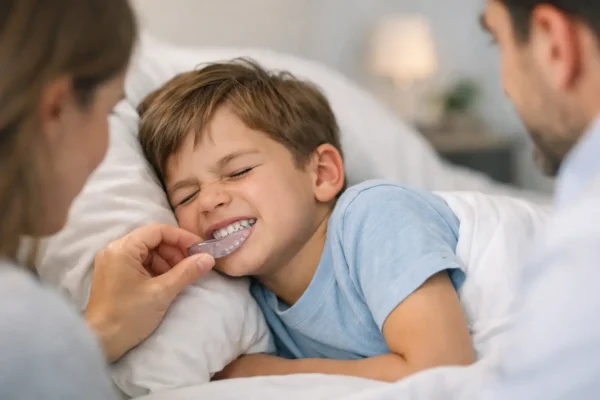
Parents often ask whether a night guard is the answer. For adults, a custom guard may be recommended to protect teeth from grinding. For children, the decision is more individual because their jaws are growing and their baby teeth are changing. An over-the-counter guard may fit poorly, feel uncomfortable, or interfere with a developing bite.
A pediatric dentist may recommend a custom appliance for an older child or teen with significant tooth wear, pain, or certain bite concerns. In other cases, careful observation and addressing sleep, stress, or jaw discomfort is the better approach. The purpose of a guard is generally to protect teeth, not to guarantee that grinding stops altogether.
Do not use an adult appliance, a sports mouthguard, or a store-bought guard for your child without professional guidance. A custom recommendation should be based on your child’s mouth, age, symptoms, and stage of dental development.
Help your child talk about stress
Children do not always connect a busy mind with a tight jaw. A simple, open question can be enough: “Has anything been making your body feel worried lately?” Avoid suggesting that grinding is their fault. Your child needs to know that this is a common body habit, and they have support.
For younger children, play, stories, and drawing may make it easier to share feelings. For adolescents, protect their privacy while keeping the conversation available. If anxiety is affecting sleep, school, friendships, or daily life, your child’s pediatrician or a qualified mental health professional can be an important part of the care team.
What to expect at a pediatric dental visit
A pediatric dentist will ask when you hear the grinding, whether your child has pain, and how they sleep. The exam may include checking the teeth for wear, feeling the jaw muscles, assessing how the teeth come together, and reviewing habits such as chewing gum or biting nails.
From there, the recommendation may be as simple as monitoring at routine visits. If there is evidence of tooth damage, jaw pain, or possible sleep disruption, the dentist can discuss next steps and coordinate care with your child’s pediatrician when appropriate. Bringing a short note of what you have observed – including snoring, morning headaches, and when the grinding began – can make the visit even more helpful.
At Little Town Smiles, families can expect these conversations to be calm, child-friendly, and focused on the whole picture. When children feel heard and parents understand the plan, dental care becomes one more way to build confidence and healthy habits that last.
If the sound of grinding has you worried tonight, take a breath, listen for any signs of pain or restless breathing, and plan to mention it at your child’s next dental visit. A caring evaluation can provide reassurance, protect growing teeth, and help your child rest more comfortably.
Categories: Blog

Comments are closed.