


Space Maintainer Versus Braces for Kids
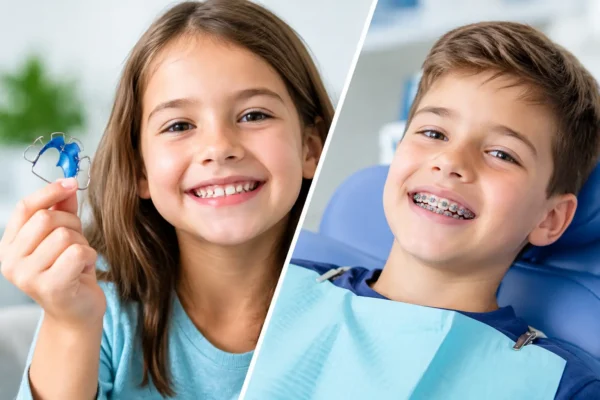
A baby molar may be small, but it has a big job. It holds a place for the permanent tooth developing beneath it. When that baby tooth is lost much earlier than expected because of decay, injury, or infection, parents often wonder about a space maintainer versus braces. Both can support a growing smile, but they solve different problems at different stages of development.
For many children, the next step is not braces at all. A space maintainer may be a simple, preventive way to protect room for a future permanent tooth. Understanding the difference can help your family feel prepared and make decisions with confidence.
What is a space maintainer?
A space maintainer is a small custom dental appliance that holds open the space left by a baby tooth that came out too soon. Think of it as a placeholder. Its purpose is to help keep neighboring teeth from drifting into the empty area before the adult tooth is ready to come in.
Permanent teeth follow a natural eruption path, and baby teeth help guide them. If a nearby tooth shifts into the open space, the permanent tooth may have less room to emerge. It might come in crooked, become blocked beneath the gums, or contribute to crowding later on.
A pediatric dentist may recommend a space maintainer after the early loss of a back baby tooth, especially a baby molar. Whether one is needed depends on several details: your child’s age, which tooth was lost, how much time remains before the permanent replacement should erupt, and the position of surrounding teeth.
Not every missing baby tooth needs a space maintainer. For example, a front baby tooth may not require one, and a tooth lost close to the expected arrival of its adult replacement may leave little time for neighboring teeth to move. A careful exam and dental X-rays help determine what makes sense for your child.
Types of space maintainers
Some space maintainers are fixed in place by the dentist. A common type uses a small metal band around a neighboring tooth with a loop that extends across the open space. Because it stays in the mouth, it does not rely on a young child remembering to wear it.
Other appliances are removable and may be considered for older children who can care for them responsibly. In situations where more than one tooth is missing, the design may be different. The appliance is always selected based on your child’s individual smile and stage of growth.
When braces enter the conversation
Braces are orthodontic treatment. They move teeth into healthier positions, correct certain bite concerns, and help create a more balanced smile. Unlike a space maintainer, braces actively apply gentle pressure to shift teeth over time.
Many children do not need comprehensive braces until most or all permanent teeth have arrived, often in the preteen or teen years. However, some children benefit from an earlier orthodontic evaluation. Early guidance can identify developing concerns such as a narrow upper jaw, a crossbite, significant crowding, protruding front teeth, or habits that affect bite development.
Early orthodontic treatment is not automatically necessary just because a child has crooked baby teeth or a few crowded adult teeth. Children grow at different rates, and some smiles need monitoring rather than immediate treatment. The goal is never to start treatment sooner than necessary. It is to address a concern at the right time, when growth may make treatment more effective or less complicated.
Space maintainer versus braces: the key difference
The simplest distinction is purpose. A space maintainer preserves existing room after early tooth loss. Braces create or manage space by moving teeth.
A space maintainer is usually a short-term preventive appliance. It stays in place until the permanent tooth begins to erupt or until the dentist determines it is time to remove it. Braces are a more involved orthodontic treatment plan that may last months or years, depending on the needs of the smile.
In some cases, a child may need both at different times. A space maintainer can help protect the developing bite during childhood, while braces later refine tooth alignment once permanent teeth are in place. Using a space maintainer does not guarantee that a child will never need braces, but it may reduce the risk of avoidable crowding caused by premature tooth loss.
Why early tooth loss deserves attention
It is tempting to think that a missing baby tooth is not a concern because another tooth will eventually replace it. But timing matters. Baby molars often remain in place for years before their permanent successors are ready to erupt.
When a baby tooth is removed because it cannot be restored, the pediatric dental team looks beyond the immediate problem. We consider the developing permanent tooth, the health of nearby teeth and gums, and how the bite may change as your child grows. This forward-looking care is one reason regular checkups are so valuable.
Preventing early tooth loss whenever possible is still the first choice. Daily brushing with fluoride toothpaste, age-appropriate flossing, balanced food choices, and routine dental visits all help protect baby teeth from cavities. When treatment is needed, restoring a tooth may allow it to continue doing its job until it is naturally ready to come out.
Caring for a space maintainer
Children usually adjust quickly to a fixed space maintainer, but it may feel unusual for the first few days. Mild tongue awareness is common. Pain, a loose band, a poking wire, or trouble chewing should be reported to the dental office so the appliance can be checked.
Good brushing is especially important around the band and along the gumline. Your child should also avoid sticky or chewy foods that can pull on the appliance, such as gum, caramel, taffy, and gummy candy. Hard foods that are bitten directly, including ice or hard candy, can also damage it.
Regular checkups allow the dentist to monitor the appliance, make sure it remains clean and secure, and watch for the permanent tooth beneath it. Please do not try to bend, glue, or repair a loose space maintainer at home. A quick professional adjustment is the safer choice.
Questions parents often ask
Will a space maintainer hurt?
Placement is generally comfortable. A child may feel pressure or notice the appliance with their tongue at first, but most children adapt within a few days. The appliance should not cause ongoing pain.
Can a space maintainer interfere with eating or talking?
Most children return to normal eating and speaking quickly. Avoiding sticky and hard foods helps protect the appliance. If speech or eating difficulties continue beyond the adjustment period, let the dental team know.
Does my child need an orthodontist right away?
Not necessarily. A pediatric dentist can monitor dental development and help determine when an orthodontic evaluation is appropriate. Some children need early orthodontic guidance, while others simply need time, prevention, and regular observation.
A calm, child-centered next step
The decision between a space maintainer and braces is not about choosing the more advanced treatment. It is about choosing the treatment that supports your child’s smile right now. At Little Town Smiles, we explain what we see in clear, family-friendly terms and help children feel comfortable asking questions, too.
If your child has lost a baby tooth early, a timely visit can protect more than a gap in their smile. It can provide reassurance, a thoughtful plan, and a great start toward healthy teeth that last a lifetime.
Categories: Blog

Comments are closed.